
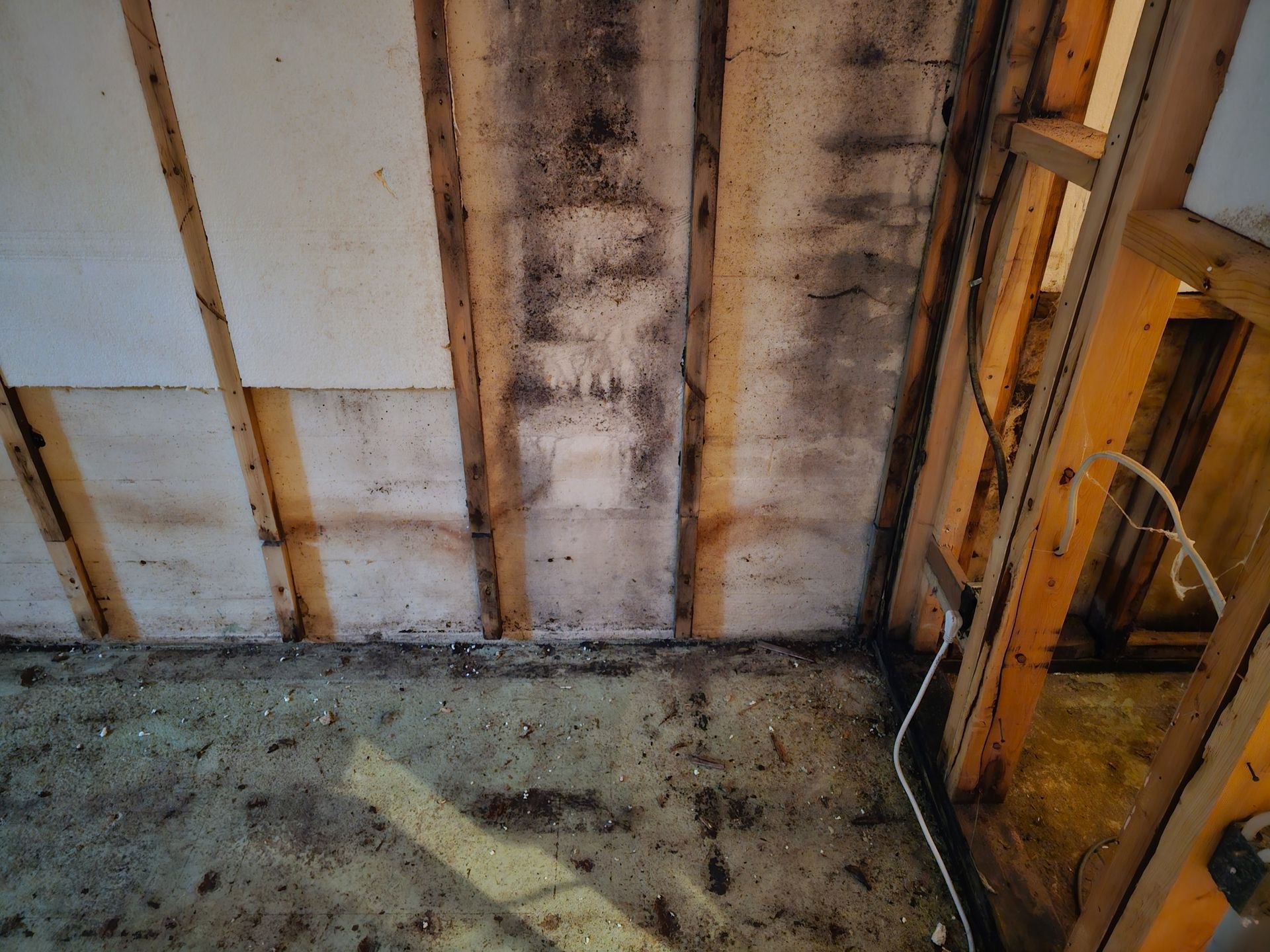
Clear Basement Mold and Restore Air Quality
Basement Mold Removal in Knoxville for foundation seepage, damp walls, and stored materials showing visible contamination
Insta Dri, LLC offers basement mold removal in Knoxville for homeowners facing contamination on foundation walls, framing, drywall, and stored belongings. You may have discovered black or green patches spreading along concrete block walls, noticed musty smells near your furnace or water heater, or found that stored boxes and furniture have become damp and discolored. Basements develop mold when foundation seepage introduces groundwater, when high humidity condenses on cool surfaces, or when poor drainage around the home allows water to enter through cracks and joints.
This service involves containment of the affected area, HEPA-filtered air scrubbing to capture airborne spores, removal of contaminated drywall and insulation, and antimicrobial treatment of concrete and framing. In Knoxville, where clay soils and seasonal rainfall contribute to foundation moisture, untreated basement mold can compromise structural framing, degrade stored materials, and circulate spores throughout the home via open stairways and HVAC returns. The remediation process addresses visible growth and prepares the space for moisture control improvements such as interior drainage systems, sump pumps, or exterior grading adjustments.
If you are noticing dampness, odors, or visible mold in your basement, contact Insta Dri, LLC to schedule a professional evaluation and containment plan.
Knoxville, TN
37919
- Mon - Fri
- -
- Sat - Sun
- Closed
What Happens During Basement Mold Remediation
You begin with a detailed inspection that identifies mold locations, measures moisture content in walls and floors, and traces water intrusion sources such as foundation cracks, window wells, or failed sump systems. Technicians establish containment barriers with plastic sheeting, seal HVAC registers to prevent spore migration, and set up negative air machines that exhaust contaminated air outdoors through HEPA filters.
After remediation, you will see clean, dry surfaces where mold previously covered walls and framing, breathe air free of the musty odor that once permeated the basement, and notice reduced humidity levels that prevent future growth. Insta Dri, LLC ensures that all affected materials are either cleaned or removed, that antimicrobial agents are applied to non-porous surfaces, and that moisture readings confirm conditions unsuitable for mold colonization.
The service includes removal of moldy drywall, insulation, and ceiling tiles, HEPA vacuuming of dust and debris, and scrubbing of concrete and framing with antimicrobial cleaners. It does not include waterproofing or drainage system installation, though recommendations for those upgrades are provided based on the moisture assessment. Acting quickly when you first notice signs of water intrusion or mold limits the extent of material removal and reduces the risk of structural damage.
Common Questions About Basement Mold Work
Homeowners often want to understand how mold is removed safely and what steps prevent it from returning after the work is finished.
What causes mold to grow on basement foundation walls?
Mold develops when porous concrete or block absorbs groundwater that seeps through foundation walls, creating damp surfaces where spores can colonize and spread across mortar joints and painted finishes.
How is contaminated drywall removed without spreading spores?
Technicians mist surfaces with water to prevent dust, cut drywall into manageable sections, and bag materials inside the containment area before carrying them directly outside to a disposal container.
When should you call for basement mold removal instead of cleaning it yourself?
You should call a professional when mold covers more than ten square feet, when it appears on structural framing or insulation, or when you cannot identify and stop the moisture source causing the growth.
Why is HEPA filtration necessary during basement remediation?
HEPA filtration captures airborne mold spores released during material removal, preventing them from settling on clean surfaces or migrating to other areas of the home through stairways and ducts.
What improvements help prevent basement mold from returning in Knoxville?
Installing interior drainage systems, maintaining proper grading around the foundation, and using dehumidifiers to keep relative humidity below fifty percent address the moisture sources that allow mold to grow in basements.
Insta Dri, LLC serves homeowners throughout Knoxville who need professional basement mold removal and guidance on long-term moisture management. Reach out to discuss containment options and moisture control strategies for your basement.